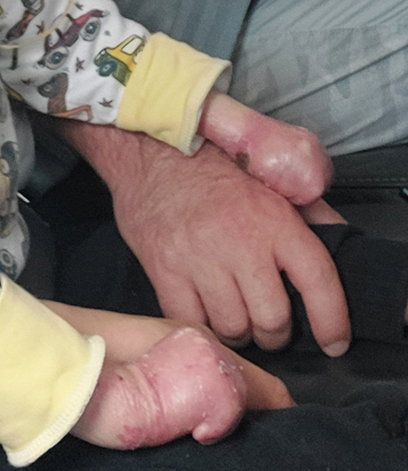
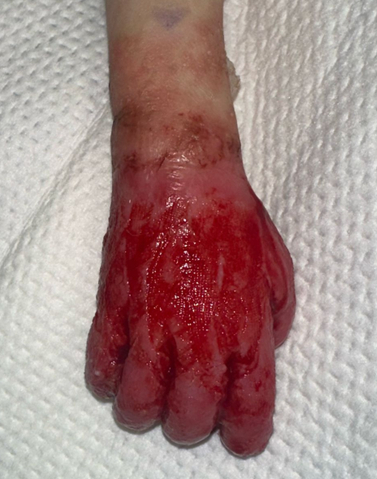
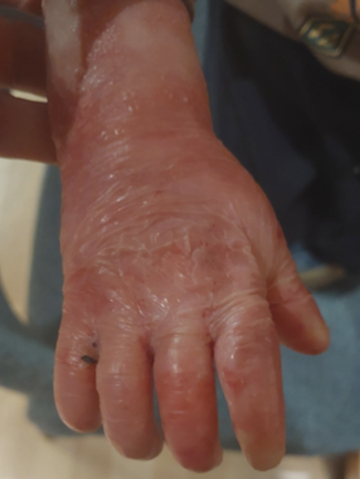
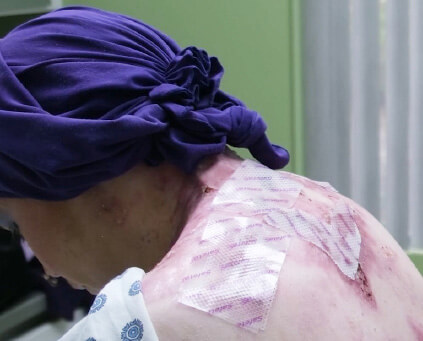
Exciting News: VYJUVEK is now approved for use from birth, can be applied by a
caregiver or patient at-home, has an increased weekly volume, & has the flexibility of being
removed at your next dressing change.
Hydrophobic dressings:
Finding what’s right for you
Hydrophobic dressings allow VYJUVEK to absorb into the wound, not the dressing
Because the dressing repels moisture instead of absorbing it, fluids like drainage or sweat
may build up and cause an odor. This odor does not come from VYJUVEK, which is odorless
You may need to change the dressing sooner than usual if there is a lot of drainage, if you
are in a humid environment, or if you sweat a lot
Selecting your dressings is not a one-size-fits-all decision. Finding the right dressing for
your needs can take time.
To make sure VYJUVEK starts working where applied, cover each treated wound or wound area with a
hydrophobic dressing.
OPTIONS
Options for hydrophobic dressings
Hydrophobic means a dressing is not absorbent. Hydrophobic dressings allow VYJUVEK to absorb into the wound, not the dressing.
After VYJUVEK application, when you remove your bandages, you can return to your standard dressing choices, unless otherwise advised by your care team.
Some dressings listed below are not hydrophobic; they are included because they may be
your preferred standard of care dressing, and we want to provide information on how you could
modify your dressings to become a hydrophobic dressing for your VYJUVEK application.
Avoid using hydrophobic dressings that contain silver (Ag) because silver can interfere with VYJUVEK.
Avoid using the below dressings as a hydrophobic dressing as they can interfere with VYJUVEK:
Adaptic® Non-Adhering
Curity® (manufactured by Cardinal Health®)
When you see “saturated gauze,” saturated means a non-woven gauze with an ointment
such as Aquaphor®, Burt’s Bees® Ointment, or Vaseline® on it so that no dry gauze remains. Xeroform® is a type of saturated gauze.
When you see “soft plastic,” that refers to a material like Glad® Wrap,
Saran® Wrap, or Tegaderm® (tacky side not touching the wound/skin).
Recommendation: If you haven't used a dressing before, test it for a short period before using it as a hydrophobic dressing.
If you use Mepilex® as your standard dressing, these are modifications to
incorporate it as your hydrophobic dressing:
Mepilex® Lite:
To make it into a hydrophobic dressing, spread either Aquaphor®, Burt’s Bees® Ointment, or Vaseline® directly onto the tacky part of the dressing or use saturated gauze (described above) at the center. You can leave a small border around the center to help the dressing remain in place.
Mepilex® Transfer:
To make it into a hydrophobic dressing, add a saturated gauze (described above) to the center. You can leave a small border around the center to help the dressing remain in place.
Mepilex® Border:
To make it into a hydrophobic dressing, place saturated gauze (described above) or a soft plastic covering the absorbent pad in the middle.
Mepilex® Foam:
To make it into a hydrophobic dressing, always place a saturated gauze (described above) or soft plastic first.
If you use Mepitel® as your standard dressing, these are modifications to incorporate it as your hydrophobic dressing:
To make it into a hydrophobic dressing, keep the plastic backing on the exterior. You can cut the plastic back slightly from edges to prevent injury to high-friction areas. Alternatively, use soft plastic in place of the original backing.
Saturated gauze
(described above) or Xeroform® can be applied instead of the plastic side.
You can add Aquaphor® or Vaseline® ointment to the center to leave a tacky perimeter.
If you use other porous (with holes) dressings as your standard dressing, these
are modifications to incorporate it as your hydrophobic dressing:
Atrauman® Silicone or UrgoTul®:
To make it into a hydrophobic dressing, keep the plastic backing on the outside or add soft plastic or saturated gauze as described above.
If you use silicone sheets as your standard dressing, they can be used as your
hydrophobic dressing without modification:
Mepiform®
Opsite® Flexifix Gentle
Scar sheets
Other options for hydrophobic dressings & the modifications to incorporate it as your hydrophobic dressing:
Cloth, plastic Band-Aids® (various sizes), or Telfa® pads:
To make these into a hydrophobic dressing, a saturated gauze (described above) needs to be placed on the absorbent part of the Band-Aid® or Telfa® pad.
Soft plastic wrap (e.g., Glad® Wrap or Saran® Wrap):
Use alone or in combination as described above. Some patients may create a border around the wound to help contain drainage. They may use it with an ointment like Aquaphor®, Burt’s Bees® Ointment, or Vaseline®.
You can request other options for hydrophobic dressings from Option Care Health®
pharmacy, like Vaseline® gauze or Xeroform®.
Products to use with hydrophobic dressings
The following products have been tested and can be used safely and effectively with VYJUVEK:
Burt's Bees® Multipurpose Healing Ointment
Coconut oil
Desitin® Healing Ointment (71.3% white petrolatum)
Epsom salts
Johnson's® Baby Powder
Jojoba oil
Neosporin®
Shea butter
Sunflower oil
Triple Paste® (12.8% Zinc Concentration)
Dressing considerations
During treatment, you may adjust your dressings as needed, including using different
dressings for different wound areas (such as one for your back and another for your neck)
Do not put an absorbent dressing directly on VYJUVEK droplets because it can absorb the
VYJUVEK
After the hydrophobic dressing is on, you can put on your standard dressing, which is often helpful to absorb drainage and pad or protect delicate parts of the body.
Dressings should not be so heavy that they cause overheating
Some patients use a layer of netting or Tubifast® to hold the top dressings in place. These materials are breathable, stretchable, and conform to the shape of your body, but should not directly contact skin.
When applying the netting or Tubifast® on an extremity, like your leg, it is best gathered into a circle, placed over the hand or foot, and then gently pulled to cover the extremity, avoiding contact to the skin.
Dressing Tips
Dressing areas of the body
Different areas of the body may require different dressing approaches. The guidance in this
section is based on clinical studies and real-world use of VYJUVEK.
Thicker dressings (e.g., Mepilex®) can be useful in padding areas of high friction and can be used as your hydrophobic dressing if applying VYJUVEK in these areas.
Check any diaper creams or ointments you’re using – many of these contain high levels of zinc. If you are using them, make sure you rinse well prior to application.
Some patients have found it helpful to create a plastic wrap layer to protect the hydrophobic dressing.
Vaseline® Gauze or Xeroform® cut slightly larger
than the wound size
Soft plastic (a material like Glad® Wrap, Saran® Wrap)
A cotton ball wrapped in saturated gauze, with the droplets of VYJUVEK applied directly to the dressing
Head scarves, headbands, or gauze wrap can be used to help hold these dressings in place
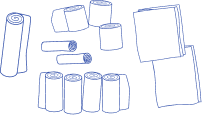
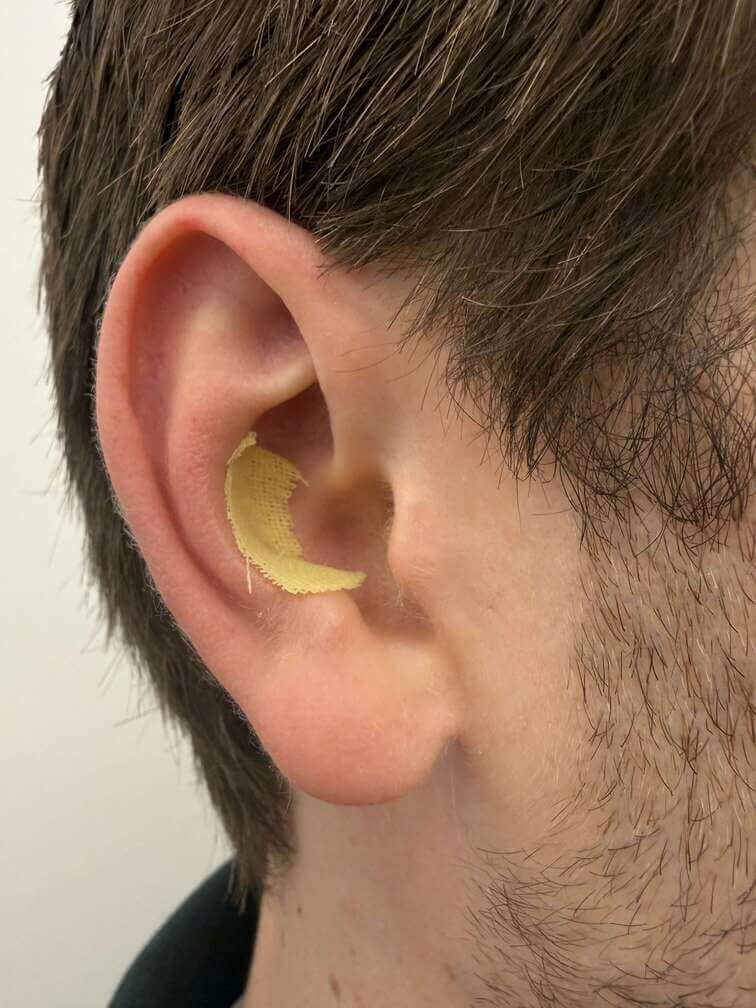
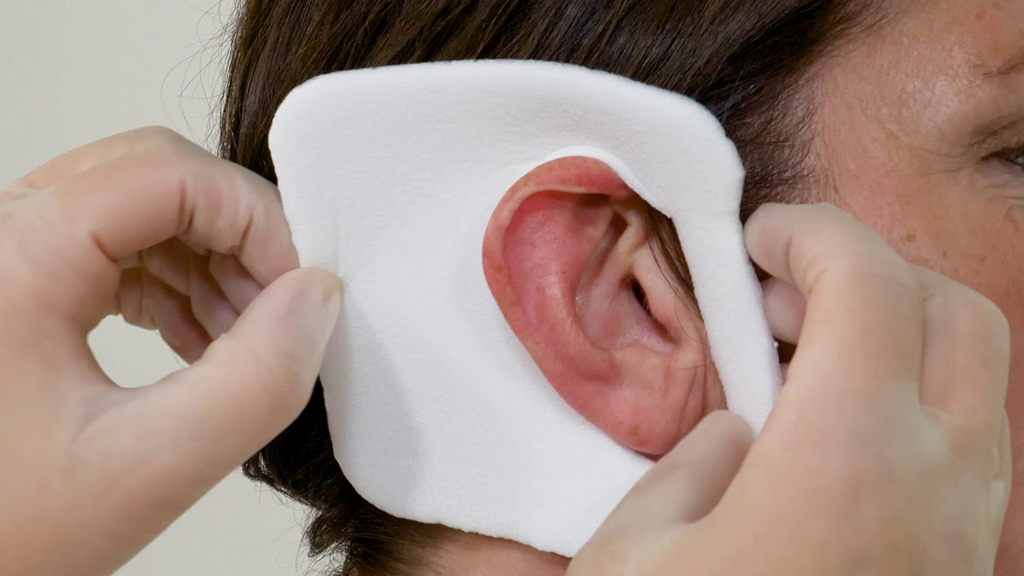
Mepilex® with modifications, can be cut for wounding behind the ear
Some patients have treated with VYJUVEK following surgery. In these cases, follow the dressing and wound care recommendations determined by your doctor.
Pre-Surgery
Post-surgery
After treatment with VYJUVEK
It’s important to make sure dressings are applied in a way that fingers and toes are separated while still being able to move them.
You can cut strips of Vaseline® gauze, Xeroform®, or you could use a saturated gauze to wrap around the palm or fingers.
Once covered with a hydrophobic dressing, you can then secure in place with your standard of care dressing.
“Magician Gloves” may be an alternative for toddlers/young children.
Cutting slits in dressings can allow for movement and flexibility
Tubifast® can be modified in ways to keep your dressing in place,
like using vests, shawls, stockings etc.
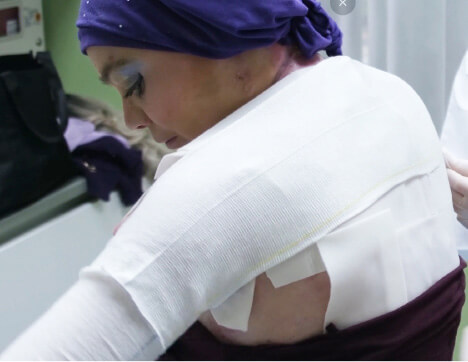
Vanessa uses cut Mepitel and applies the tacky side down and keeps the plastic side up as her hydrophobic dressing after applying VYJUVEK.
After placing the hydrophobic dressing, on top she places her standard dressing of Mepilex Transfer as one piece then a Tubifast dressing is applied to hold everything in place.
Saturated gauze can fit in the nasal opening
Finger cot with gauze or cotton inserted inside to keep in place
Make sure there is enough material remaining out of your nose for removal and to avoid inhalation
For forehead/hairline: consider saturated gauze
For scalp with hair: you may want to avoid saturated gauze as it can add extra oil, soft plastic may be an option
After your hydrophobic dressing is on, you can use a variety of things to keep your dressing in place – headband, beanies, Tubifast® (shaped like a head dressing)
For sensitive areas such as external vaginal, groin, or anal wounding:
Consider applying before bedtime to reduce disruption of wear (using the restroom, movement, etc.)
Mesh briefs or tights can help hold dressings in place
Plastic wrap can be irritating to these areas, consider alternatives:
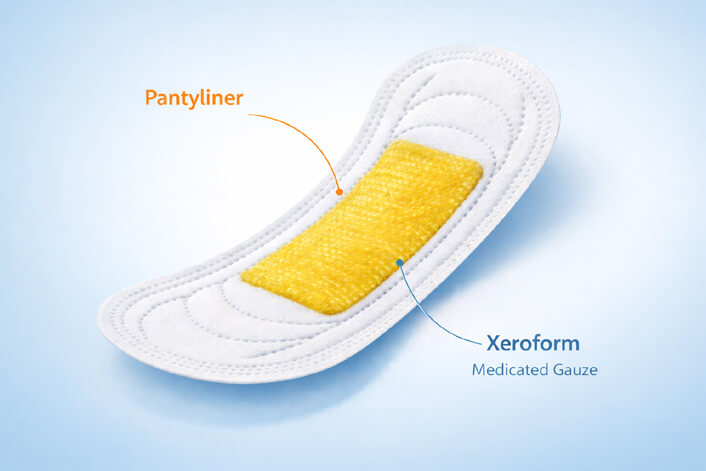
Saturated gauze applied to a pantyliner
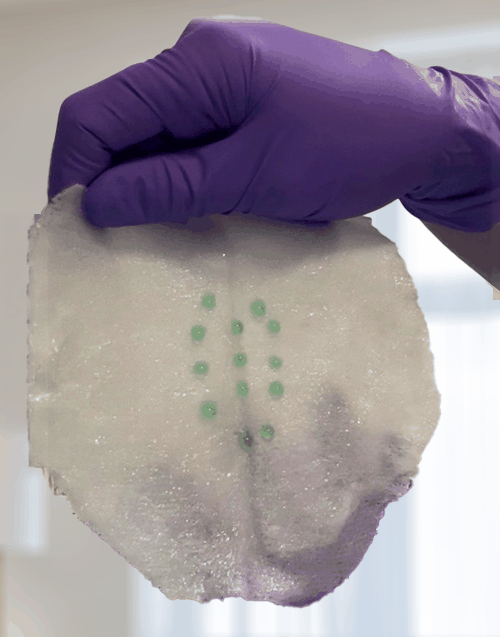
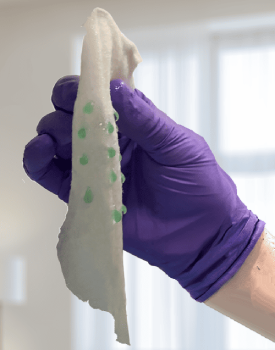
For wounding in the groin or anal region: Using Vaseline® Gauze or a nonwoven gauze saturated in Vaseline®, Aquaphor®, or Burt's Bee's® healing ointment, apply the VYJUVEK droplets directly onto the center of the dressing.
The hydrophobic dressing can then be folded in half like a book and worn overnight for treatment.
VYJUVEK is clear. Droplets shown are for demonstration purposes only and contain green dye.
Reminder: Due to the nature of hydrophobic dressings, you may see
more drainage on these areas when removing dressings.
VYJUVEK is a topical gel used to treat wounds in adult and pediatric patients
(from birth) with dystrophic epidermolysis bullosa (DEB).
IMPORTANT SAFETY INFORMATION
VYJUVEK gel should be applied by a healthcare professional, patient, or caregiver.
After treatment, patients and caregivers should be careful not to touch treated
wounds and dressings until the next bandage change. If accidentally exposed to the
VYJUVEK gel, clean the affected area.
Wash hands and wear protective gloves when changing wound dressings. Disinfect
bandages from the first dressing change with a virucidal agent and dispose of the
disinfected bandages in a separate sealed plastic bag in household waste. Dispose of
the subsequent used dressings in a sealed plastic bag in household waste.
The most common adverse reactions (>5%) were itching, chills, redness, rash,
cough, and runny nose. These are not all the possible side effects with VYJUVEK.
Call your healthcare provider for medical advice about side effects. You may report
side effects to FDA at
1-800-FDA-1088
or to the Sponsor at
1-844-557-9782.
Please see Important Safety Information above and
click here
for full Prescribing Information.
IMPORTANT SAFETY INFORMATION
INDICATION AND USAGE
VYJUVEK is a topical gel used to treat wounds in adult and pediatric patients
(from birth) with dystrophic epidermolysis bullosa (DEB).
IMPORTANT SAFETY INFORMATION
VYJUVEK gel should be applied by a healthcare professional, patient, or caregiver.
After treatment, patients and caregivers should be careful not to touch treated
wounds and dressings until the next bandage change. If accidentally exposed to the
VYJUVEK gel, clean the affected area.
Wash hands and wear protective gloves when changing wound dressings. Disinfect
bandages from the first dressing change with a virucidal agent and dispose of the
disinfected bandages in a separate sealed plastic bag in household waste. Dispose of
the subsequent used dressings in a sealed plastic bag in household waste.
The most common adverse reactions (>5%) were itching, chills, redness, rash,
cough, and runny nose. These are not all the possible side effects with VYJUVEK.
Call your healthcare provider for medical advice about side effects. You may report
side effects to FDA at
1-800-FDA-1088
or to the Sponsor at
1-844-557-9782.
Please see Important Safety Information above and
click here
for full Prescribing Information.