
“Isaiah used to get a lot of open wounds on his back, and it would take a lot of time for them to heal. And those are much, much better now.”
Starting VYJUVEK
At-Home Application
VYJUVEK application can fit into your current routine
Over 95% of patients use VYJUVEK at home once a week, with the choice of application by yourself, a caregiver, or a healthcare professional.
These pages provide helpful tips on preparing, applying, and aftercare for VYJUVEK:
What to Expect
Getting started
Choosing where to start
- VYJUVEK patients often begin applying VYJUVEK to wounds that affect their daily lives the most. These can be large or small wounds
Wound considerations
- Wounds in areas of higher friction (such as your hands, back, or underarms) and larger wounds may take longer to heal
- Smaller wounds or those in areas with less daily trauma may heal more quickly
Using VYJUVEK after surgery
- VYJUVEK can also be used on wounds after surgery, for example, between the fingers or around G-tube sites following insertion
VYJUVEK works best when wound care, skin infections, nutrition, anemia, and itch are
all properly addressed.
Apply VYJUVEK gel in small drops
- Space drops about 1 cm apart (about as wide as a fingertip)
- The drops will look like a grid pattern
- VYJUVEK gel can also be applied to wounds where a blister has been drained and the skin is left in place
- If it is hard to put the gel directly on the wound, you can apply it to the hydrophobic bandage instead, using the same fingertip spacing
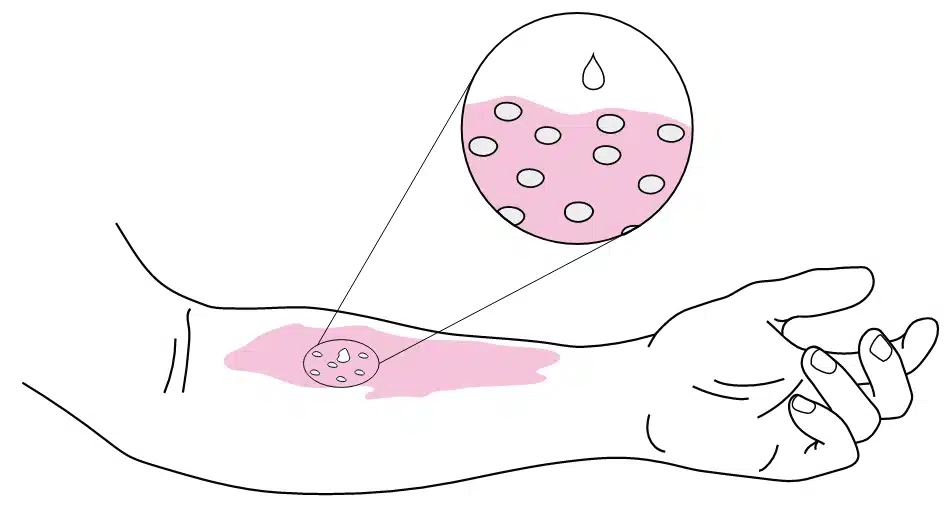 For illustrative purposes only.
See how to apply VJUVEK
Read Instructions for Use for all the information on how to apply VYJUVEK.
Chelsea's VYJUVEK routine
Real-world application
Learn how to add VYJUVEK into your routine, including information on cleansing, topical products, and what supplies you'll receive:
INDICATION AND USAGE
VYJUVEK is a topical gel used to treat wounds in adult and pediatric patients (from birth) with dystrophic epidermolysis bullosa (DEB).
IMPORTANT SAFETY INFORMATION
VYJUVEK gel should be applied by a healthcare professional, patient, or caregiver.
After treatment, patients and caregivers should be careful not to touch treated wounds and dressings until the next bandage change. If accidentally exposed to the VYJUVEK gel, clean the affected area.
Wash hands and wear protective gloves when changing wound dressings. Disinfect bandages from the first dressing change with a virucidal agent and dispose of the disinfected bandages in a separate sealed plastic bag in household waste. Dispose of the subsequent used dressings in a sealed plastic bag in household waste.
The most common adverse reactions (>5%) were itching, chills, redness, rash, cough, and runny nose. These are not all the possible side effects with VYJUVEK. Call your healthcare provider for medical advice about side effects. You may report side effects to FDA at 1-800-FDA-1088 or to the Sponsor at 1-844-557-9782.
Please see Important Safety Information above and click here for full Prescribing Information.
IMPORTANT SAFETY INFORMATION
INDICATION AND USAGE
VYJUVEK is a topical gel used to treat wounds in adult and pediatric patients (from birth) with dystrophic epidermolysis bullosa (DEB).
IMPORTANT SAFETY INFORMATION
VYJUVEK gel should be applied by a healthcare professional, patient, or caregiver.
After treatment, patients and caregivers should be careful not to touch treated wounds and dressings until the next bandage change. If accidentally exposed to the VYJUVEK gel, clean the affected area.
Wash hands and wear protective gloves when changing wound dressings. Disinfect bandages from the first dressing change with a virucidal agent and dispose of the disinfected bandages in a separate sealed plastic bag in household waste. Dispose of the subsequent used dressings in a sealed plastic bag in household waste.
The most common adverse reactions (>5%) were itching, chills, redness, rash, cough, and runny nose. These are not all the possible side effects with VYJUVEK. Call your healthcare provider for medical advice about side effects. You may report side effects to FDA at 1-800-FDA-1088 or to the Sponsor at 1-844-557-9782.
Please see Important Safety Information above and click here for full Prescribing Information.
×
You are about to leave the VYJUVEK.com website
Are you sure you want to leave?